Relatos de los orígenes
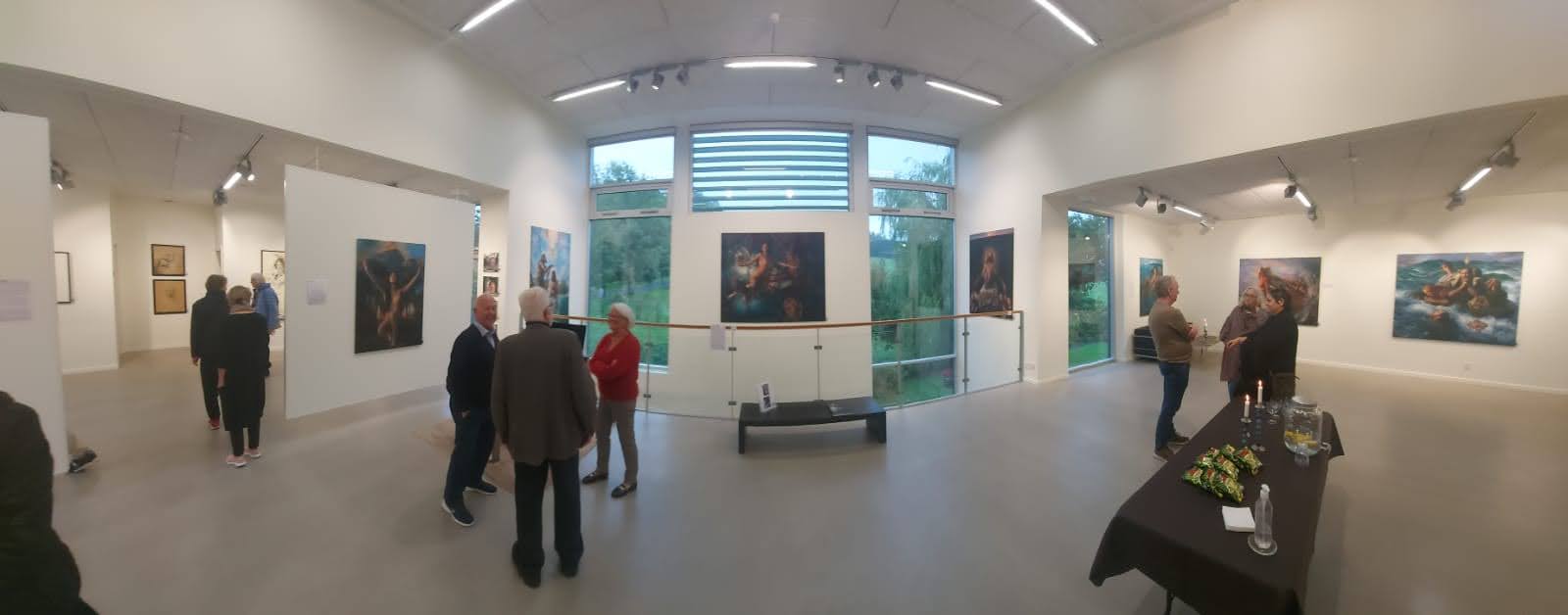
Esta exposición es representativa de los últimos siete años de investigación y desarrollo artístico, filosófico y espiritual del autor, donde se zambulle dentro de variadas inquietudes de su más personal propuesta inicialmente oscura y desdibujada, solamente alumbrada con tenues destellos de intuición y que, a través de un trabajo de gran honestidad y esfuerzo, se ha ido aclarando y consolidando convirtiéndose en una propuesta de pintura contemporánea, muy personal con enfoque tradicional, en cuanto a temática y técnica, que intenta ir penetrando en los misterios originarios de la conciencia y la libertad ocultos en el insondable silencio del buen Dios.


Temática
El artista presenta una fina conexión de cinco grandes ciclos temáticos: teología, moralismo, mitología grecolatina, mitología maya y mitología mapuche, siempre consciente de la gran dificultad que entraña cada uno por la grandeza y complejidad que encierran. Esta diversidad tiene en común el aspecto fundacional de la historia, cultura y alma humanas. A través de la común experiencia metafísica del ser, en cuanto a humanidad, y su relación trascendental con la realidad que lo invade desborda, exaltando su natural sentido de lo divino hasta alcanzar los niveles de sobrenaturalidad determinada esencialmente por la cercanía de la verdad teológica de la revelación.
(“El bautismo de Jesucristo” y “El domingo de Resurrección y el seno de Abraham”)
En el ciclo de teología, intenta poner en juego las aportaciones iconográficas del oriente y el occidente cristiano reunidos y actualizados con una personal sensibilidad contemporánea, consciente de la dificultad que entraña este desafío, el artista va escogiendo los principales hitos de la revelación, abordados en el tradicional esquema del santo rosario, para ir progresivamente ampliando y perfeccionando las propuestas a la vez que profundiza en el misterio de espiritualidad.
(“Mascarón de proa” y “El naufragio”)
El ciclo moralista se basa en la obra satírica “La nave de los necios”, publicada en Basilea en el s.XV (en el original alemán, Das Narrenschiff; en su traducción latina, Stultifera Navis) escrita por Sebastian Brand, que, en una sucesión de 112 episodios críticos acompañados cada uno de un grabado, critica los vicios de su época a partir de la denuncia de distintos tipos de necedad o estupidez. Una reflexión con respecto al tema del mal y su fundación en la libertad metafísica radical del ser humano.
(“El rapto de Europa” y “Pan y Siringa”)
En el ciclo de mitología grecolatina el pintor ofrece una relectura de Las Metamorfosis de Ovidio, genial obra poética en quince libros publicada el año 8 d. C., que narra la historia del mundo desde su creación hasta la deificación de Julio César, combinando con excepcional belleza y libertad la mitología e historia de la época.
(“Ixquic y los cuatro búhos mensajeros de Xibalbá” y “La fecundación de Ixquic”)
En el ciclo de mitología maya, el artista busca representar al estilo tradicional occidental los relatos plasmados en el libro “Popol Vuh”, también conocido como “Libro del Consejo” que, presumiblemente siendo una recopilación de textos y relatos orales del s. XVI hecha por fray Francisco Ximénez, atesora gran parte de la sabiduría y muchas de las tradiciones mayas en un compendio de aspectos de gran importancia como religión, astrología, mitología, costumbres, historia y leyendas que relatan el origen del mundo y de la civilización así como de los muchos fenómenos que suceden en la naturaleza.
(“Licarayen y Peripillán furioso”, “La fecundación del Trauko”,”La producción de las plantas” y “El sacrificio de Licarayen”)
En el ciclo de mitología mapuche el artista se basa en la apasionante obra de investigación titulada “Trentrenfilú” del italiano Alberto Trivero, que a finales del s.XX con gran perseverancia logró recorrer y entrevistar a varios pobladores del sur de Chile, para así recopilar los principales mitos cosmogónicos orales que se transmiten a través de las generaciones. Una etnia inmortalizada en el importante poema épico español del siglo XVI “La Araucana” de Don Alonso de Ercilla, del que será fuente de un nuevo ciclo de pinturas en torno a la formación de la identidad chilena.
Técnica
Esta exposición se trata de cuadros pintados al óleo tradicional con la adición de resinas alquídicas que aportan excelentes propiedades de secado y estabilidad a la capa de pintura. La paleta de color está principalmente basada en los colores primarios y algunas tierras y los fondos son blancos con imprimaturas normalmente de color medio a veces fríos -en grises azulados o verdosos- o cálidos -en tierras u óxidos de hierro- La técnica en la que está desarrollada la obra está firmemente anclada en la tradición técnica de los últimos 500 años de pintura al óleo, sin desaprovechar el aporte de la tecnología digital y la fotografía.
Para el artista ha sido interesante y, sobre todo, deseable abordar estas temáticas con un lenguaje que sintetice y contenga la gran amplitud de los recursos plásticos y visuales que hemos ido acumulando como cultura y es el resultado a toda una vida de estudios de las obras clásicas, procedimientos técnicos de la pintura, trazados geométricos y armónicos, con gran énfasis en el modelado del claroscuro. El tratamiento de la luz y la composición intenta envolver al espectador y hacerlo participar de la escena que se presenta vívida e intensa ante sus ojos.
Consciente de los valores artísticos contemporáneos pero muy respetuoso del imperio la sensibilidad artística personal, el pintor ha visto necesario e imprescindible plantear esta manera de “buen hacer” desde el punto de vista del artesano tradicional, como manera de mantener vivo un gusto por este noble y antiguo -pero siempre actual- oficio de la pintura.
Stories of origins
This exhibition is representative of the author’s last seven years of research and artistic, philosophical, and spiritual development. His work dives into the wide-ranging concerns of his most personal proposal, initially dark and blurred, only illuminated by faint flashes of intuition, which has been clarified and consolidated through a work that reflects his honesty and hard work, making it a very personal contemporary painting proposal with a traditional technical and thematic approach. It attempts to delve into the original mysteries of conscience and freedom hidden in the good Lord’s unfathomable silence
Themes
The artist presents a subtle connection of five great thematic cycles: theology, moralism, Greco-Latin mythology, Mayan and Mapuche mythology. He is always mindful of the major difficulty involved in each of them due to the grandeur and complexity they entail. This diversity is shared by the foundational aspect of humans’ history, culture and soul. Through the common metaphysical experience of the being, as humanity and its transcendental relationship with the reality that invades it overflows, exalting its natural sense of the divine to reach levels of supernaturalness essentially determined by the proximity of the theological truth of
revelation.
(“The baptism of Jesus Christ” and “ Resurrection Sunday and Abraham’s Bosom”).
In the theology cycle, he attempts to bring the Christian Eastern and Western iconographic contributions into play, gathered and updated with a personal contemporary sensibility. The artist is aware of the difficulty involved in this challenge, and chooses the main milestones of the revelation, presented in the traditional scheme of the holy rosary, to progressively broaden and perfect the proposals while going into depth into the mystery of spirituality.
(“Mascaron de proa” and “The shipwreck”)
The moralist cycle is based on the satirical work “Ship of fools”, published in Basilea in the 15th century (in its original title in German, Das Narrenschiff; in its Latin translation, Stultifera Navis) written by Sebastian Brand. In a succession of 112 critical episodes, each accompanied by an engraving, it criticizes the vices of his time by denouncing different types of foolishness or stupidity. A reflection on the theme of evil and its foundation in human beings’ radical metaphysical freedom.
(“The rape of Europe” and “Pan and Syrinx”).
In the cycle of Greco-Latin mythology, the painter offers a re-reading of Ovid’s Metamorphoses, a brilliant poetic work in fifteen books published in 8 A.D., which narrate the history of the world from its creation to the deification of Julius Caesar, combining mythology and the history of the time with exceptional beauty and freedom.
(“Ixquic and the four owl messengers of Xibalba” and “The impregnation of Ixquic”).
In the Mayan mythological cycle, the artist seeks to represent the stories in a traditional Western styles that are depicted in the book “Popol Vuh”, also known as “The Council Book”, presumably a compilation of texts and oral stories from the 16th century created by Fray Francisco Ximénez. Much of the wisdom and many of the Mayan traditions are treasured in a compendium of aspects of great importance such as religion, astrology, mythology, customs, history and legends that tell the story of the origin of the world and civilization as well as the many phenomena that occur in nature.
(Licarayen and furious Peripillán”, “The impregnation of Trauko”, “The production of plants” and “The sacrifice of Licarayen”).
In the cycle of Mapuche mythology the artist relies on the exciting research work entitled “Trentrenfilú” by the Italian Alberto Trivero. He managed to travel and interview several southern Chilean settlers at the end of the 20th century and through sheer perseverance gathered the main cosmogonic myths that are transmitted from generation to generation. An ethnic group immortalized in the important 16th century Spanish epic poem “La Araucana” by Don Alonso de Ercilla, which will be the source of a new cycle of paintings on the formation of Chilean identity.
Technique
This exhibition consists of traditional oil paintings with added alkyd resins that provide excellent drying properties and stability to the paint layer. The colour palette is mainly based on primary and some earth colours. The backgrounds are white with primers that are usually medium coloured, sometimes cold- in bluish or greenish grays- or warm- in earth or iron oxides. The work is firmly anchored in the last 500 years of technical oil painting tradition, and includes the contribution of digital technology and photography.
For the artist it has been interesting and particularly desirable to approach these themes with a language that synthesizes and contains the great breadth of plastic and visual resources that we have been accumulating as a culture. It is the result of a lifetime study of classical works, techniques of painting, geometric and harmonic lines, with a great emphasis on the modeling of chiaroscuro. The treatment of light and composition attempts to involve the viewer and make him/her participate in the scene that appears vividly and intensely before his/her eyes.
Aware of contemporary artistic values but very respectful of the rule of personal artistic sensitivity, the painter has found it necessary and essential to approach this way of “good work” from the perspective of the traditional craftsman, as a way of keeping the taste for this noble and ancient- but always current- craft of painting alive.[:es]